Was Torosaurus a grown-up Triceratops?
A real scientific argument, still going. Here is the evidence on each side, so you can see how palaeontologists test an idea.
Two dinosaurs, two years apart
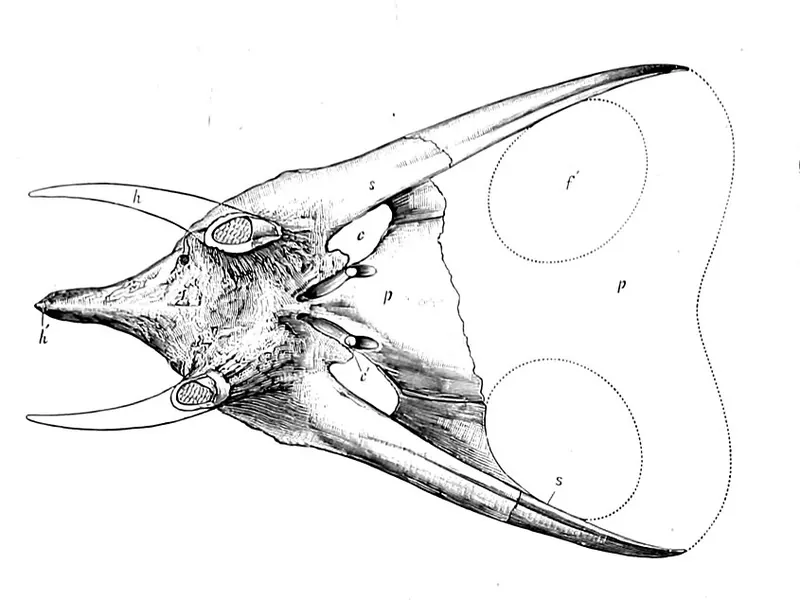
Marsh named Torosaurus in 1891, two years after Triceratops. It also had three horns, but a longer frill with two big holes in it. Smithsonian Magazine: The Torosaurus identity crisis continues, 2012 Torosaurus and Triceratops lived in the same places and times across western North America. Smithsonian Magazine: New study says Torosaurus = Triceratops, 2010
The idea: same animal, different ages
In 2010 John Scannella and Jack Horner proposed that Torosaurus was really the fully grown form of Triceratops, its frill thinning and opening up holes late in life. Smithsonian Magazine: The Torosaurus identity crisis continues, 2012 Part of their evidence came from bone seen under a microscope: horns of “adult” Triceratops still looked immature, while Torosaurus horns had dense, mature bone. Smithsonian Magazine: New study says Torosaurus = Triceratops, 2010
What about the name?
If they were the same animal, Triceratops would keep its name, because it was named first (1889) and Torosaurus later (1891). Smithsonian Magazine: Relax, Triceratops really did exist, 2010
The case against
In 2012 Longrich and Field found both young and mature skulls of both Torosaurus and Triceratops, and concluded Torosaurus is a separate dinosaur. Longrich & Field (2012), Torosaurus is not Triceratops, PLOS ONE
A 2013 study comparing the shape of 28 skulls also found Torosaurus distinct from Triceratops. Maiorino, Farke, Kotsakis & Piras (2013), Is Torosaurus Triceratops?, PLOS ONE A 2011 study of the puzzling skull Nedoceratops also kept Torosaurus as a separate genus. Farke (2011), Nedoceratops hatcheri, PLOS ONE
The reply
Scannella disagreed in 2012, saying “Nothing in this paper falsifies the synonymy” and pointing to bone microstructure and rock layers. Smithsonian Magazine: The Torosaurus identity crisis continues, 2012
So who is right?
The Smithsonian article concluded that one ambiguous skull alone cannot end the debate. Smithsonian Magazine: The Torosaurus identity crisis continues, 2012 The Natural History Museum lists Torosaurus as its own dinosaur, named by Marsh in 1891. Natural History Museum: Torosaurus (Dino Directory) · checked 27 Oct 2026
Our honest summary: of the studies we read, the three published from 2011 to 2013 (Farke; Longrich and Field; Maiorino and colleagues) all keep Torosaurus as a separate dinosaur, while Scannella disagreed in 2012. We have not found a newer study that settles it. Either way, the name Triceratops is safe.
For a long time small Triceratops skulls were overlooked: by 2006 only four non-adult specimens had been described. Horner & Goodwin (2006), Major cranial changes during Triceratops ontogeny, Proc. R. Soc. B Young and old dinosaurs can look so different that scientists have to ask, for every species, whether two skull shapes are two animals or two ages.
And the frill: what was it for?
The frill might have protected its neck. It could also have helped attract mates, or let Triceratops recognise each other. Natural History Museum: Triceratops (Dino Directory) A 2009 study found Triceratops had more injuries on the squamosal bone of its frill than Centrosaurus did, which fits Triceratops locking horns and the frill acting as a shield. Farke, Wolff & Tanke (2009), Evidence of combat in Triceratops, PLOS ONE
These ideas can all be true at once. Nobody has settled which mattered most.
How big was it, really?
The Natural History Museum gives its length as 9 metres. Natural History Museum: Triceratops (Dino Directory) · checked 27 Oct 2026 The Natural History Museum gives its weight as 10,000 kg (10 tonnes). Natural History Museum: Triceratops (Dino Directory) · checked 27 Oct 2026
A 2015 study of its teeth describes Triceratops horridus as up to 9 metres in total length. Erickson et al. (2015), Wear biomechanics in the slicing dentition of Triceratops, Science Advances · checked 27 Oct 2026 The Smithsonian describes it as roughly the same size as an elephant. Smithsonian Magazine: Meet the dinos of “Deep Time”, 2019 · checked 27 Oct 2026
These are estimates from incomplete skeletons, which is why they differ.